2009-07-17

Skulls Confetti Dog Hoodie Sweatshirt + Vintage Washed Denim Skirt (Dog Clothes) - Black/L


Price: $19.99 Shop with Amazon.com Now !!

Product Description

This fantastic outfit is designed especially for fashion-forward hounds. Featuring colorful skulls confetti silkscreened design throughout, this hooded top + dark washed denim skirt is handcrafted of the softest cotton sweatshirt and denim material, to keep your pet warm and fashionable this season. Care Instructions: Machine wash cold. Line dry. Size S fits chest girth 13¡±-15¡±, M fits chest girth 16¡±-18¡±, size L fits chest girth 18¡±-20¡±. ***Click on the "rger images and other views" above for a more detailed sizing chart and measuring instructions. This listing is for style, color and size in the listing title***.nn the

Product Details

  • Color: BLACK
  • Brand: HOW'S YOUR DOG

Features

  • Luxurious thick, ultra soft cotton terry with plushy fleece interior
  • Trendy Kangaroo Pouch on back
  • Easy front snap Closure - Pink snaps down the chest to ensure a perfect fit
  • Available in 2 colors (Pink and Black) and 3 sizes (S,M,L) . Click on the "See larger images and other views" above for the detailed sizing chart and measuring instructions.
  • This listing is for style, color and size in the listing title


Wedding Party Dog Bridesmaid Dress Pink XXS


Price: $15.49 Shop with amazon Now !!

Product Description

These darling dresses will make dogs the stars of the wedding party. Begonia pink satin dress has ruffled trim on neck and hem, and a large double bow at the waist. A soft and comfortable design with Velcro® closures for an easy fit.


Product Details

  • Amazon Sales Rank: #295869 in Kitchen & Housewares
  • Size: XXS
  • Color: pink
  • Brand: East Side Collection

Features

  • Elegant bridesmaid dress for dogs made of begonia pink satin.
  • Ruffled trim on neck and hem
  • Large double bow at the waist
  • Velcro® closures for an easy fit
  • XXS-Length 8", Neck 6"-8", Chest 10"-13"


2009-07-14

Dog Coat and Dog Fur Maintenance


Your dog’s fur is a very important aspect of your dogs life, keeping it clean and in good shape is a good way to keep your dog happy, healthy, and clean. If you don’t keep your dogs fur in good shape it will only be a mater of time before tangles and knots appear in your dog’s coat picking up insects, pests, and causing discomfort for your dog.

Different dogs have different types of fur and with so many cross breeds and different looking dogs, naming all the different types of fur would be impossible. There are many different types of dog fur, some will look after themselves more than others but the general rule is that a longer dog coat will normally tangle and know easier than others.

To maintain your dog’s fur and keep it looking as it should, lots of grooming may be needed so this should be taken into account when buying a new dog. But grooming does not need to be a chore you have to do for your dog because grooming is proven to be a great bonding between owner and dog and creates trust and comfort for your dog making them a lot easier to train.
Step one is to get a good comb for your dog ensuring that there are no sharp edges and that your dog is comfortable with you using it without hurting him/her. Your vet or local pet shop many be able to help you and give you advice with choosing the correct comb but this will be a deciding point in whether your dog will enjoy you doing it or not.

After you have chosen your comb, grooming should happen often and you should do it thoroughly each time, ensuring all knots and angles are removed, if you haven’t yet combed your dog’s fur then it may be difficult to start so do a bit at a time to ensure you don’t discourage your dog and make them not like the grooming process.
Your dog’s fur is a very important aspect of your dogs life, keeping it clean and in good shape is a good way to keep your dog happy, healthy, and clean. If you don’t keep your dogs fur in good shape it will only be a mater of time before tangles and knots appear in your dog’s coat picking up insects, pests, and causing discomfort for your dog.

Different dogs have different types of fur and with so many cross breeds and different looking dogs, naming all the different types of fur would be impossible. There are many different types of dog fur, some will look after themselves more than others but the general rule is that a longer dog coat will normally tangle and know easier than others.

To maintain your dog’s fur and keep it looking as it should, lots of grooming may be needed so this should be taken into account when buying a new dog. But grooming does not need to be a chore you have to do for your dog because grooming is proven to be a great bonding between owner and dog and creates trust and comfort for your dog making them a lot easier to train.

Step one is to get a good comb for your dog ensuring that there are no sharp edges and that your dog is comfortable with you using it without hurting him/her. Your vet or local pet shop many be able to help you and give you advice with choosing the correct comb but this will be a deciding point in whether your dog will enjoy you doing it or not.

After you have chosen your comb, grooming should happen often and you should do it thoroughly each time, ensuring all knots and angles are removed, if you haven’t yet combed your dog’s fur then it may be difficult to start so do a bit at a time to ensure you don’t discourage your dog and make them not like the grooming process.

After the initial combing, the more often you groom your dog the easier it will be, leaving it for long periods of time is not advised because this means it is more likely to hurt your dog when it eventually does get done. If your dog is finding it tough going then maybe a dog bath is needed to make it easier to detangle and add to your dog furs health.

credit :: John Williams

2009-07-03

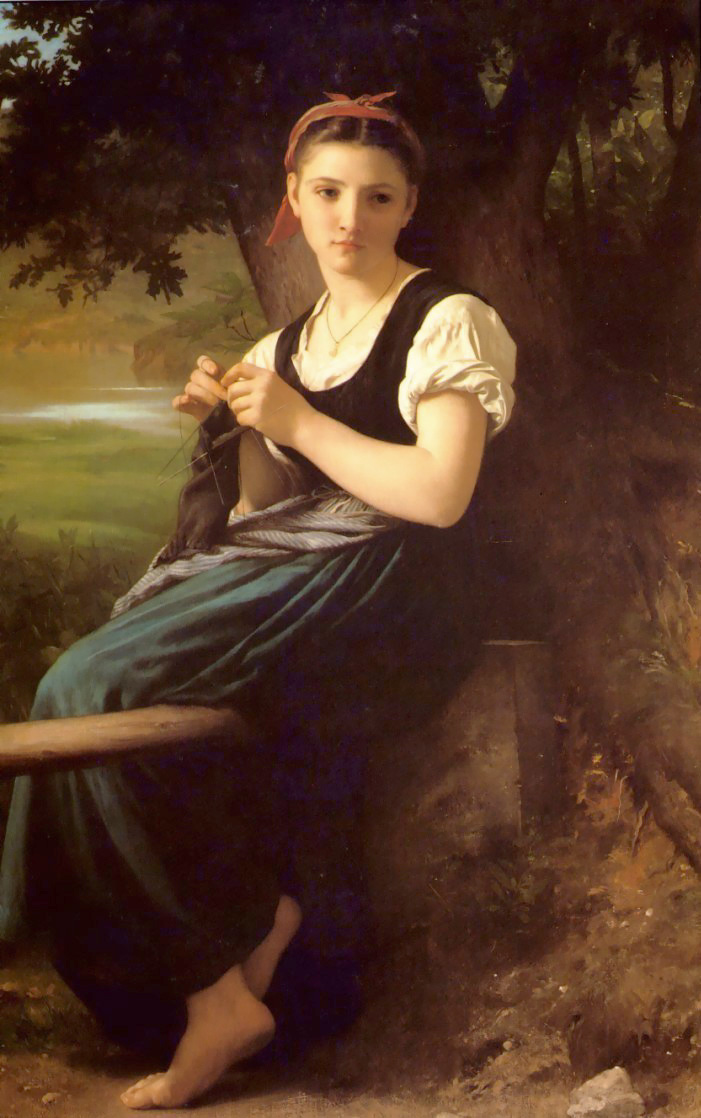
Knitting History

Knitting, as defined by Wiktionary, is "Combining a piece of thread with two needles into a piece of fabric." The word is derived from knot, thought to originate from the Dutch verb knutten, which is similar to the Old English cnyttan, to knot.[1] Its origins lie in the basic human need for clothing for protection against the elements. More recently, knitting has become less a necessary skill and more a hobby.

Early origins of knitting
Knitting is a technique for producing fabric from a strand of yarn or thread. Unlike weaving knitting does not require a loom nor other large equipment, making it a valuable technique for nomadic and non-agrarian peoples.
The oldest artifact with a knitted appearance is a type of sock. It is believed that socks and stockings were the first pieces produced using techniques similar to knitting. These socks were worked in Nålebinding, a technique of making fabric by creating multiple knots or loops with a single needle and thread. Many of these existing clothing items employed nålebinding techniques; some of them look very similar to true knitting. For example, 3rd-5th century CE Romano-Egyptian toe-socks. Several pieces, done in now obscure techniques, have been mistaken for knitting or crocheting.
Most histories of knitting place its origin somewhere in the Middle East, from where it spread to Europe by Mediterranean trade routes, and then to the Americas with European colonization[2]. The earliest known examples were found in Egypt and cover a range of items, including complex colorful wool fragments and indigo blue and white cotton stockings, which have been dated between the 11th and 14th centuries CE.[3]

Early European Knitting
The earliest known knitted items in Europe were made by Muslim knitters employed by Spanish Christian royal families. Their high level of knitting skill can be seen in several items found in the tombs in the Abbey of Santa Maria la Real de Huelgas, a royal monastery, near Burgos, Spain. Among them are the knitted cushion covers and gloves found in the tomb of Prince Fernando de la Cerda, who died in 1275. The silk cushion cover was knit at approximately 20 stitches per inch. It included knit patterns reflecting the family armory, as well as the word baraka ("blessings") in Arabic in stylized Kufic script[4][5]. Numerous other knit garments and accessories, also dating from the mid-13th century, have been found in cathedral treasuries in Spain.
At this time, the purl stitch (the opposite action to the knit stitch) was unknown and purely stockinette fabric was produced by knitting in the round on multiple knitting pins. Sometimes the knitting was cut open, a process now known as steeking[citation needed].
Several paintings from Europe portray the Virgin Mary knitting and date from the 14th century, including Our Lady Knitting by Tommaso da Modena (circa 1325-1375) and Visit of the Angel, from the right wing of the Buxtehude Altar, 1400-10, by Master Bertram of Minden[6].
The first known purl stitches appear in the mid-16th century, in the red silk stockings in which Eleanora de Toledo, wife of Cosimo de Medici, was buried, and which also include the first lacy patterns made by yarn-overs[7][8], but the technique may have been developed slightly earlier. The English Queen Elizabeth I herself favored silk stockings[citation needed]; these were finer, softer, more decorative and much more expensive. Stockings that belonged to her still exist, demonstrating the high quality of the items specifically knitted for her. During this era the manufacture of stockings was of vast importance to many Britons, who knitted with fine wool and exported their wares. Knitting schools were established as a way of providing an income to the poor. The fashion of the period, requiring men to wear short trunks, made fitted stockings a fashion necessity. Stockings made in England were sent to the Netherlands, Spain, and Germany[citation needed].
Men were also the first to knit for an occupation[citation needed].

Importance in Scottish history
Knitting was such a vast occupation among those living on the Scottish Isles during the 17th and 18th centuries that whole families were involved in making sweaters, accessories, socks, stockings, etc. Fair Isle techniques were used to create elaborate colorful patterns. Sweaters were essential garments for the fishermen of these islands because the natural oils within the wool provided some element of protection against the harsh weather encountered while out fishing.
Many elaborate designs were developed, such as the cable stitch used on Aran sweaters, which was developed in the early 20th century in Ireland.

Industrial revolution
Rudimentary knitting devices had been invented prior to this period, but were one-off creations. With the advent of the Industrial Revolution, wool spinning and cloth manufacture increasingly shifted to factories. Women were employed to operate the machinery, rather than spinning and knitting items at home. The consistency of factory spun wool was better in that it was more uniform, and its weight could be gauged better as a consequence.
The city of Nottingham, particularly the district known as Lace Market, dominated the production of machine-knitted lace during the Industrial Revolution and the following decades.

1920s: the Russian Civil Wars and China
After the White Russians' defeat in the Civil War, many units retreated into China's Xinjiang and were interned there. As China was about to descend into a civil war of its own, the Russian internees were transported by camel caravans to Eastern China. According to Owen Lattimore, it was then that they passed on the art of knitting to the Chinese caravan men, who had ready supply of camel hair from their animals. In 1926, Lattimore was able to observe camel-pullers "knitting on the march; if they ran out of yarn, they would reach back to the first camel of the file they were leading, pluck a handful of hair from the neck, and roll it in their palms into the beginning of a length of yearn; a weight was attached to this, and given a twist to start it spinning, and the man went on feeding wool into the thread until he had spun enough yarn to continue his knitting". This way the camel men not only provided themselves with warm camel-hair socks, but were able to make knitwear for sale as well.[9]

1939-1945: Knitting for Victory
"Make do and mend" was the title of a booklet produced by the British wartime government department, the Ministry of Information. Wool was in very short supply, as were so many other things, and the booklet encouraged women to unpick old, unwearable, woolen items in order to re-use the wool.
Knitting patterns were issued so that people could make items for the Army and Navy to wear in winter, such as balaclavas and gloves. This not only produced the much-needed items, but also gave those on the "home front" a positive sense of contributing to the war effort.

1950s and 60s: Haute Couture
After the war years, knitting had a huge boost as greater colors and styles of yarn were introduced. Many thousands of patterns fed a market hungry for fashionable designs in bright colors. The twinset was an extremely popular combination for the home knitter. It consisted of a short-sleeved top with a long-sleeved cardigan in the same color, to be worn together.
Girls were taught to knit in school, as it was thought to be a useful skill, not just a hobby. Magazines such as "Pins and needles" in the UK carried patterns of varying difficulty including not just clothes, but also blankets, toys, bags, lace curtains and items that could be sold for profit.

1980s: A Decline
The popularity of knitting showed a sharp decline during this period in the Western world. Sales of patterns and yarns slumped, as the craft was increasingly seen as old-fashioned and children were rarely taught to knit in school.
The increased availability and low cost of machine knitted items meant that consumers could have a sweater at the same cost of purchasing the wool and pattern themselves, or often for far less.

Early 21st Century Revival
Following this decline, the 21st century has seen one of the largest resurgences of the craft in history. Natural fibers from animals, such as alpaca, angora, and merino, and plant fibers, chiefly cotton, have become easier and less costly to collect and process, and therefore more widely available. Exotic fibers, such as silk, bamboo, and qiviut, are growing in popularity as well. The yarn industry has started to make novelty yarns which produce stunning results without years of knitting experience. Designers have begun to create patterns which work up quickly on large needles, a phenomenon known as instant-gratification knitting.
Celebrities including Julia Roberts, Winona Ryder, Dakota Fanning, Cameron Diaz and Russell Crowe have been seen knitting and have helped to popularize the revival of the craft. The new millennium has also seen a return by men to the art of knitting.
As time and technology change, so does the art of knitting. The Internet allows knitters to connect, share interests and learn from each other, whether across the street or across the globe. Among the first Internet knitting phenomena was the popular KnitList with thousands of members. In 1998, the first online knitting magazine, KnitNet, began publishing. Blogging later added fuel the development of an international knitting community.
Patterns from both print and online sources have inspired groups (known as knit-a-long's, or KAL's) centered on knitting a specific pattern. Knitting podcasts, such as Cast-On and Knit Cast, have also emerged, with much cross-pollination of ideas from blogs, 'zines, and knitting books. Traditional designs and techniques that had been preserved by a relatively small number of hand-knitters are now finding a wider audience as well.
In addition, a type of graffiti called yarn bombing, has spread worldwide.
On January 14, 2006 influential author and knit-blogger Stephanie Pearl-McPhee, otherwise known as Yarn Harlot, challenged the knitting world to participate in the 2006 Knitting Olympics.[10] To participate, a knitter committed to casting-on a challenging project during the opening ceremonies of the 2006 Winter Olympics in Torino, and to have that project finished by the time the Olympic flame was extinguished sixteen days later. By the first day of the Olympics, almost 4,000 knitters had risen to the challenge.


Credits :: http://en.wikipedia.org ::

2009-06-25

crochet and knitting for your dog.

To day we offer to crochet and knitting books for who love spend free time with dog's handmade.

first : Knitting for Dogs: Irresistible Patterns for Your Favorite Pup -- and You! (Paperback)


Your dog does, that's who, and there's no creature more deserving of a hand-knit expression of that love. Plus, he'll look darn cute in any number of the more than twenty easy-to-follow patterns in Knitting for Dogs. It's the perfect way to spoil the pet that spoils you with affection.

You'll find designs here for every kind of dog, from sequined sweaters for your toy dog princess to a handsome sport coat with racing stripes for your L or XL big boy. But why stop there when you can knit a hat with Fair Isle trim or fingerless Aran gloves to match your pet's jaunty sweater? And because accessories make the dog, there are patterns for everything from a cat-shaped squeaky toy to a walk-in-the-park shoulder bag for carrying keys, doggie treats, and the all-important plastic bags.

With foolproof instructions on how to properly measure a dog so that the project comes out just right, Knitting for Dogs will provide hours of entertainment for you and turn even the average pooch into the envy of the dog-run set. So whether you're a beginner or expert knitter, on the cutting edge of fashion or all about what's practical, you'll find something here to please both you and your canine companion.

Detail

Paperback: 96 pages
Publisher: Fireside (October 25, 2005)
Language: English
ISBN-10: 0743270169
ISBN-13: 978-0743270168
Product Dimensions: 8.5 x 8.4 x 0.4 inches


see more information click here


Second : Men Who Knit & The Dogs Who Love Them: 30 Great-Looking Designs for Man & His Best Friend (Hardcover)


Two hot topics—male knitters and knits for dogs—come together in this one fabulous, fun volume! It’s a stand-out-from-the-crowd collection that features strong, colorful, and masculine designs that will appeal to men of all ages...plus companion items for their four-legged friends. The writing is informative, supportive, and humorous; crowd-pleasing images of well-dressed pooches with their sartorially splendid owners add to the entertainment. Geared toward knitters of all levels—but with an emphasis on intermediate and advanced techniques—the projects will wow readers. Imagine a quirky Rasta-inspired hat and a cool matching doggie jacket. Or a classic gray, cabled vest in merino wool and cashmere—one for him and one for Fido. Hit the town in a colorful patchwork pullover; matching saddlebags turn walk time into a fashionable outing. The projects are offered in a wide range of sizes to fit a variety of male and doggie body types—and, as an added feature, there are tips and anecdotes from more than a dozen male knitters.

Detail
Hardcover: 144 pages
Publisher: Lark Books (January 28, 2007)
Language: English
ISBN-10: 1579908748
ISBN-13: 978-1579908744
Product Dimensions: 9.7 x 8.6 x 0.8 inches

see more information click here.


Third : Sweater/Skirt Pattern Set with Fluffy Dog Pattern


Sweater with embroidered fluffy dog, skirt for American Girl dolls and other 18 inch dolls.

Detail
Amazon Sales Rank: #4300245 in Books
Published on: 2003-01-01
Released on: 2003-01-01
Format: Download: PDF
Binding: Digital
4 pages


see more information click here

2009-06-23

dogs cute dress : Dotted Bow & Belt


Description

This season's must have dress for the haute hound! This girly French blue denim pleated
dress is designed especially for fashion-forward hounds. It features a fantastic "crown"
embroidered design on back and easy front Velcro closure. Dotted belt with an adorable
bow and oversized white buttons added extra flair. Care Instructions: Machine wash cold.
Line dry.

Details

Color: NAVY BLUE
Brand: HOW'S YOUR DOG

Features

- Featuring a fantastic "crown" embroidered design on back with dotted belt
- Crisscross Spaghetti Straps and oversized white buttons added extra flair
- Easy front Velcro closure and traditional back Pockets
- Available in 3 sizes (S,M,L) .
- This listing is for style, color and size in the listing title

more information click here

2009-06-19

Please read !!!!


Hi everybody I made this blog because I love dogs

and like to make them happy by my gift.

And I love to make gift with my hand for them too.


I know I'm not good for pretty idea,

but I love its. If you don't like or its not your look up.

Please know, I'm sorry.


But if you love its and want to copy dog picture, patern picture, handmade picture or article to your web,

you can.

And please credits and links to http://doghandmade.blogspot.com/


Thank you very much!!


dog's dress review no.1


Choowup-Choowup dog clothes made by yarn.


Sai Sabye dog clothes made by yarn.

dog necklace fashion review no1.

Good dog necklace made by cotton string, characters beads, small bell.


Saiping necklace collection no.1 made by tendon and beads.

dog collar review no.1

prepare material
dog flower collar.

material : yarn (color by your like) and small bell.

tools : Crochet hook, your hand and your heart!


yarn collar.

material : yarn (color by your like) dog locker collar and small bell.

tools : Crochet hook, your hand and your heart!

see how to in soon...

Dancing Poodle

Poodle. See! very cute??..

3 Adorable Shih Tzu Puppies

Shih Tzu

credits :: http://www.youtube.com/watch?v=4Eeezw0D_8E ::

dog review no.2

Hi! My name is Saiping. I was born on 13 February 2008.
I am hybrid between shizu and poodle.

see me soon in here. bye!~

Smartest Yorkie Puppy Ever! Such A Yorkshire Terrier Dog

Yorkshire Terrier

credits :: http://www.youtube.com/watch?v=3U910CBXLRs ::

Bangkaew Luk-hin.chumsangsongkram show

Bangkaew

credits :: http://www.youtube.com/watch?v=xlNLrNFPlv0 ::

dog review no.1


Hi , My name is Mumium. I was born on 4 November 2007.
I am hybrid between Bangkaew (thai dog lineage) and yorkshire terrier.

ok. see me soon here!..

The History of Dogs

Dogs belong to the Canid family (Canidae).

Dogs first appeared about 40 million years ago, before any other carnivore families like bears or cats.

Carnivores have a pair of teeth similar to blades that are called carnassials. These teeth are like scissors and can slice through skin and muscle.

Thirty five living species are included in the Canid family tree. There are three main groups.1. South American foxes2. Wolves, including jackals, wolves, coyotes, and dogs3. Foxes including the red fox and his relatives.The dog that we commonly know is the closest kin to the gray wolf.

There is genetic evidence and fossils that confirm that all dogs are the direct descendants of wolves. Skeletons of the earliest dogs and their wolf cousins are very hard to find differences.

There are around 400 domestic breeds of dogs and they all belong to the same species, Canis familiaris.

A group that can successfully reproduce with one another is known as a species. A sub-group of the species is a breed. This has been made by human interaction. All individuals in a breed can reproduce with each other, but the features of the breed can be altered or lost when one breed is crossed with another.

Fossil records show there are three main groups of dogs and they have been around for many years. Some have become extinct.

Group one came from North America around 40 million years ago. These dogs looked like a mix of a weasel and a fox from fossil evidence. They became extinct around 15 million years ago. They were called Hesperocyon, which means �western dog�.

Group two were larger and looked similar to hyena�s with big jaw muscles and strong teeth. They began around 34 million years ago and became extinct around 2.5 million years ago. They were called borophagines.

Group three called the canines includes the dogs we know today. This group is first seen in fossils from North America around 7 million years ago.


credits :: thanks article from http://www.contentmart.com write by http://www.dog-pictures.co.uk/ ::

Training Your Dog to Sit

Training your dog to "sit" is probably the first thing you will train your puppy to do. I write puppy because you can start the training as soon as the puppy has settled in his new home. You might think this isn't that important, a dog knows how to sit. Well, I think it is very important. Read on and you will found out why and how to train your dog to sit.

1. This first one is easy. You just start by saying "sit" every time the puppy sits itself. He learns to associate the word sit with the action. This is a tip you can use in all training.

2. Take out his favorite treat and keep it in your hand. Sausage usually works well but remember to cut it in small pieces so the puppy can swallow it fast.

3. Sit down on the floor so you get to the same level as the dog. You are less threatening when you sit. More important is that you are close to the dog so you can reward him faster. More about this soon.

4. Slowly move the treat over your puppy's head. The intention is to get the puppy to smell the treat (he will) and follow it with his nose. He has two options. Either back still standing or sit down. It's easier to sit down.

5 Immediately as he sits you say "sit" and give him the piece of sausage. This is the key factor to all training. The reward has to be exact in the same moment as the dog does the right thing.

6. Praise the dog. Show your joy with your voice as well as with your body language.

7. Repeat these steps 3-5 times. Not more than that though, as it has to be fun! On the other hand you can repeat the steps several times during the day.

8. In the next step you should try these steps while standing up. You can try to see if the dog reacts only to the word "sit" without your hand and the treat. If he sits down you obviously should praise him and if he doesn't don't care. You should never show your disappointment to your dog when you are training.

This is pretty easy for the puppy. In a day or two you will get him to sit with your "sit" command. Now you can try to make him sit down beside you. This is actually a preparation for the heel training. There you want him to sit as soon as you stop walking. If you have thoughts about obedience competitions with your dog you should consider the exact position where he sits and also how fast he sits. That is however off topic in this article.

The next level is to strengthen the word so you get the dog to sit in every situation no matter what's going on around him. This is an ongoing process and you should never stop training. Use every new situation to train him. Make him sit with new people, new dogs and new surroundings.

It's quite easy to train your dog to sit. If you consider not training your dog my advice is, think again. When you start training with your new puppy you get much more than the sitting part The puppy loves to do things with you. He learns to listen to his name. He gets used to training and doing things with you and on your initiative. This all together strengthen your position as the leader, and the puppy feels secure. When the puppy falls asleep in the evening his last thoughts should be: "This is really a great pack!"

credits :: thanks article from http://www.contentmart.com write by Tim Robinson ::

5 fun games to play with your dog that will make him healthier and happier

Summer is just around the corner for most of us, so it's now time to dust of the dog and, yourself of course and, head to the local park for some fun games with your pet. There are a great many dog activities you can choose from that will suit all breeds and, the good part is they are free to play, you don't need any expensive equipment, and above all they will help to keep your dog in tip top physical and mental condition.

Fetch
One of the most favourite games of all dog breeds, when they learn the rules of course, is fetch. When you teach a dog to fetch it not only adds to your arsenal of dog training techniques, it also helps to strengthen the bond you have with your dog, which will have positive benefits in all areas of your relationship.

When teaching your dog to fetch use a ball that is not too small or too hard, as he could swallow it or damage his teeth. If you have a puppy that you would like to teach to fetch a ball and bring it back, here are some puppy training techniques that will help make playing this game a success.
Put your puppy on a long training lead. Show him the ball while at the same time teasing him a little to get his interest. When your dog shows interest, role the ball across the floor, but only a foot or so and, ask your dog to 'fetch' or ' get it '. As soon as your dog picks up the ball begin excitedly calling him back to you. Once he is in arms length, hold on to the ball and ask your dog to 'leave ' or ' drop '. When he opens his mouth, praise him and give him a little food treat if you like, or another game of fetch. Keep practicing this exercise by increasing the distance you role the ball across the floor.

Find the treat
Find the treat is another one of those fun games to play with your dog, as it encourages the dog to use his primary sense, his sense of smell. Begin by hiding a food treat, for example a little bit of cheese or sausage for your dog to find. Although dogs have a highly developed sense of smell they still need a little encouragement to discipline their searching abilities, so make it simple to begin with, by basically leading your dog to the treat, while using a word such as ' find '. Soon you will be able to hide treats in any place and your dog will quickly find them.

Tracking
If you really want to develop and test your dogs abilities in this area you could try the search game in your local park. Use your dogs ball or a small piece of cloth for this exercise. Again, begin by putting your dog on his training lead, as this will help you to guide him initially to the ball or piece of cloth. Begin by walking a little way and, while your dog is not looking discreetly drop the ball or cloth. Walk on a few feet then stop, turn around, give your dog his command, such as 'find ' and begin walking in the direction of the ball or cloth. Encourage your dog all the time you are doing this. When he finds his ball, give him plenty of praise and play the game again. Practice developing this exercise in just the same way as you did with the earlier example.

Tug
A lot of dog breeds enjoy games which involve tugging, especially the larger breeds. Again this is an excellent way of helping your pet get rid of pent up energy however, like all games they are much better enjoyed when everybody plays by the rules. To make tug one of those fun games to play with your dog, make sure that you always initiate this game; your dog must be aware that the tug toy is yours and not his and, it is up to you to decide when you play this game. Don't over stimulate your dog during this game, and do make sure that you teach him the 'out' or ' leave' command first, so as you have control over the game at all times.

Some trainers suggest that you should always 'win' the tug toy from your dog, as a way of not encouraging dominant behaviour. I wouldn't play a game for too long that I didn't win at occasionally, would you? It's OK to let your dog 'win' his tug toy now and again, providing he plays the games by your rules.

Catch the Frisbee
One last game that is especially popular with a lot of dog breeds, especially with breeds such as Collies, German Shepherds and Retrievers for example, is ' catching the Frisbee '. If your dog has not played this game before, do make sure that he is healthy enough to do so, as this game can be quite physically demanding. To teach your dog to catch the Frisbee, begin by getting your dog to take the Frisbee by rolling it a foot or so across the floor. When your dog is happily picking up the Frisbee, you can then stand back a couple of feet and throw it to your dog for him to catch. Once your dog is catching the Frisbee from this distance consistently, you can begin increasing the distance gradually.

Go ahead and have fun with these five dog activities. They are a great way to keep both you and your dog healthy. However, do remember not to over do things, especially in hot weather. Take frequent breaks between your play sessions and, don't forget to take plenty of water for your dog.

credits :: thanks article from http://www.goarticles.com/ write by Ivan Ojounru ::

Teach Your Dog to Fetch Things

Having a pet is wonderful as they can be your great friends and companions, and the best stress busters. They may not behave like us, but they do need attention, love, care, and respect. They need to be disciplined just like kids with patience, love and understanding.

If you want your dog to be well behaved and disciplined, you need to have its attention, to make sure that it understands what you are trying to say/teach. No use trying to tell your dog something if it is out of sight or ear shot, for if it isn't interested, it shall not obey and ignore your words; which means it is okay to ignore (a wrong signal).

Before you start teaching, your dog needs to learn to concentrate on you and what you are saying. A simple way to start is via the game of Fetch which can be played with a stick, ball, or cloth. The benefits of the game is that it is interesting, makes the dog learn to observe, understand and respond to you; plus the exercise, and fun that goes along with it.

Please note that your dog might take time to respond, and learn especially the independent and shy dogs plus those who aren't the type to fetch things. Hence, be patient. You shall need to pamper and shower them with love and attention after every session regardless of whether they did what you wanted or not. Remember they need to be trained just as you teach a kid anything new. Moreover, start training early to get better results.

You can start with some colorful thing (cloth/ball/stick) and grab your dog attention by dangling in front of it. If it responds by trying to lick/catch it, throw it at a short distance away from you. Whatever the dog does (sniffing/picking it up), praise it so that it realizes that it has done something good. If the dog picks it up, teach it to return to you through gestures(clapping/waving hands, calling its name) or anything else you think it shall respond to. Don't expect it to fetch or return at once, as taking interest and learning takes time.

You can increase its interest with colorful items, something that moves as movement generally attracts dogs. Get the dog to notice the object by moving/throwing the object, or just letting the dog feel/touch it. If the dog responses slowly, create interest like making it face a wall, so the object (ball) returns back to him.

As the session progresses, gradually increase the distance between the object to fetch and you. Increase the number of fetches until the dog actually picks it and runs away with it. Here, you need to redirect it back to you through a gentle tuck or nudge of the cord tied to its collar.
Hence, it might be tough in the beginning but it pays in the long run to be patient for once the dog learns to fetch and obey you, teaching new tricks or activities become easier.


credits :: thanks article from http://www.goarticles.com/ write by Jeff Nenadic ::

Grooming - the secret of great dog ownership

With certain dog breeds you can't avoid grooming, but did you know that grooming any dog can have great benefits?

If you have chosen to share your life with a long haired breed, you have obviously signed up for a lot of grooming. This is not only to keep your dog looking good, but to keep your canine companion comfortable too. If a dog's coat has tangles it can irritate him every time he moves. That's not conducive to him being happy, taking exercise, concentrating during training, or even enjoying being petted.

Dogs that don't shed have their own problems. They need brushing and regular haircuts to keep them looking and feeling good.

If you opt for a shedding breed, you're going to be brushing the floor as much as the dog, but regular grooming will remove dead hair from the coat, leaving less to end up on the floor. For short coated shedding breeds, you can try wiping them over with a damp cloth to really get that loose hair out.

So whatever the coat type, you need to groom for practical reasons. However there are also less obvious reasons to groom your dog. It's a really effective way to keep track of your dog's health. Any health problems such as lumps will be quickly discovered, and early detection is an advantage with many conditions. You will also be aware faster if your dog is gaining or losing weight, or there is a significant change in his coat condition, all valuable indications of the state of his health and wellbeing.

Grooming time is also an excellent bonding time with your dog. A high priority for your dog is receiving attention from you, and grooming is quality attention, when you are really focused on him. Some trainers suggest that grooming is more effective than just petting to let you dog know you love him. Others maintain that grooming your dog demonstrates to him that he must be subordinate to you. Whatever the truth is, grooming can enhance your relationship.
Puppies and young dogs benefit from regular grooming, as it accustoms them to be handled, and encourages them to associate handling with pleasure. Making sure your dog will let you look in his ears, inspect his teeth, and examine his eyes will help visits to the veterinarian go smoother.
Older dogs appreciate grooming, especially gentle brushing and smoothing as it warms and eases stiff joints. Simply being near your dog while grooming will alert you to any breath or body odour issues.

Don't forget that to ensure your grooming efforts don't go to waste, you should wash his bedding regularly - including that smelly old blanket in the back of the car.
So pick up the brush, comb or grooming mitt and go to work on your dog -you'll both be glad you did.

credits :: thanks article from http://www.goarticles.com/ write by Julie Hill ::

How to Modify the Bowls of Your Dog to Not Slip

Being a dog owner you will probably know that dog bowls that slip while your dog eats or drinks water can be a big frustration. This will cause your dog to make a mess all over the place, or end up eating his food in the lounge. This short article will give you some tips that you can use to make their bowls non-skid bowls.

To begin with, you can weigh down the food and water bowls of your dog. Locate a metal ring, an enamel plate or something circular that is heavy. This weight should not be able to break, as that will defeat the purpose. The width should also not be any wider than the dog bowl at its widest end.

You can also glue the food and water bowls of your dog. Make use of a kind of glue that will stick on any surface that it gets attached to. Some of these possibilities will comprise of cement, contact cement and also of epoxies. It is also vital for you to strictly follow the guidelines of the manufacturer when you are doing this. Also make sure that you always allow yourself enough ventilation when performing this task.

After the glue is dry give it a try and see how your dog does with their food and water bowls that are now able to stick to the surface. Attach some more mass to the bowls if required. You can also add some extra materials to the bowls as you will see below.

You can add friction materials such as the lining cloth used on shelves or rubber materials used on mats. Cut it out so that it will fit the shape of the food and water bowls. Then attach the friction material to the bottom of the weight underneath the bowls.

There are also a few other ideas that you can use in order to make food and water bowls that will not slip. One option would be to construct a wooden box that you can use to place the bowls in. Then you can attach this wooden box to some wooden frame in a place that it out of the way.
You can also try and find a metal pan that is very heavy. Make sure that you clean it well, put some friction materials inside it and then allow for it to dry. This can then be used as a food or water bowl.

You can also think about constructing a little cement channel with a small incline and a drain stop, so that you can hose it out to clean it. It might even be possible for you to construct two sections that your dog can use for both eating and drinking.


credits :: thanks article from http://www.goarticles.com/ write by John Williams ::

Yellow Puppies Blogger Template | Template Design | Elque 2008